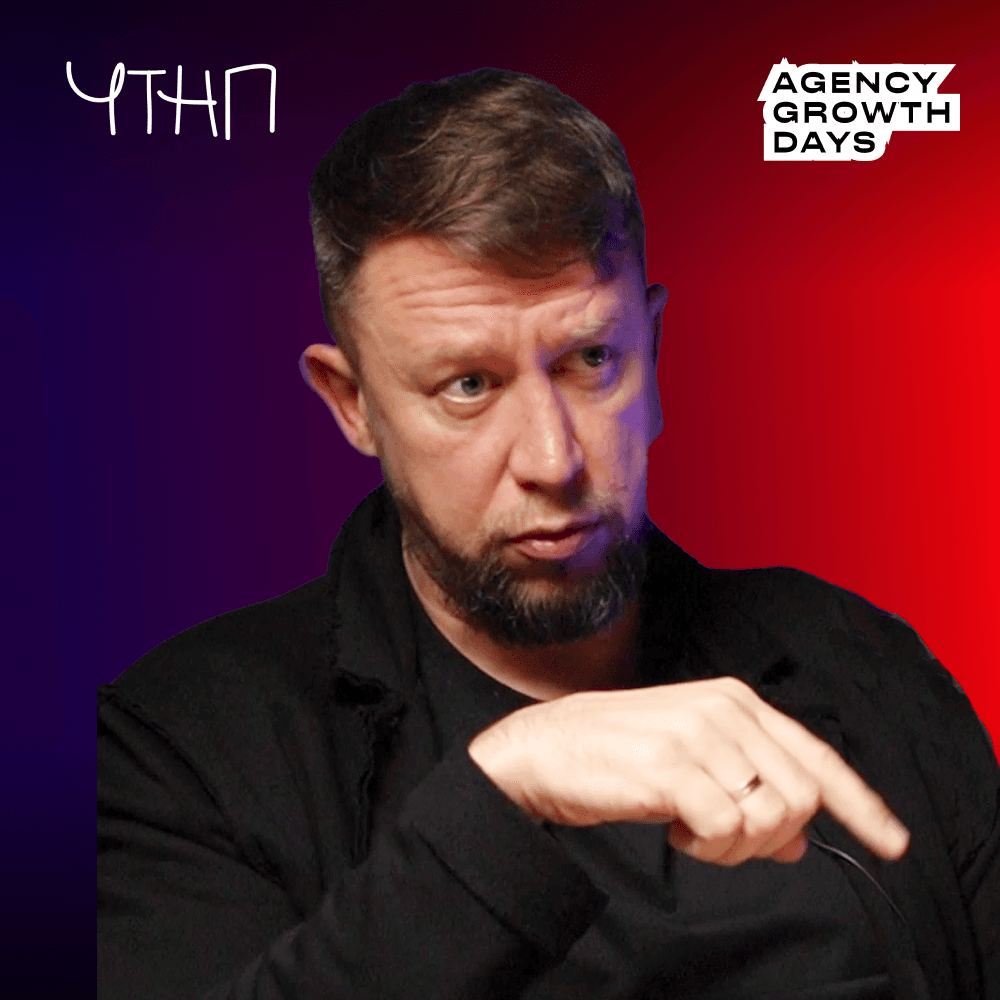
IT ENTREPRENEUR AND MENTOR ALEXANDER NAUMENKO: "IF YOUR TEAM IS WEAK, YOU'LL BURN OUT QUICKLY"
From freelancer to co-founder and former CEO of a company with an annual turnover of 5 million dollars—that’s the journey our podcast guest has taken over 20 years in IT. Today, he not only continues to develop new projects himself, but also helps other entrepreneurs do the same. In a conversation with Sergey Anchutin, CEO of Doubletapp, he shared his thoughts on whether it’s better to nurture top managers within your company or hire them from the market, how many chances employees should get to fail, how to achieve an annual turnover of 5 million dollars, and when mentoring is just a waste of time and money.

Author:
Svetlana Prokhorova
Category:
articles
Publication date:
"YOU NEED TO KEEP ALIGNING EXPECTATIONS": ON THE INTERACTION BETWEEN A LEADER AND THEIR TEAM
What should a CEO control?
You know, there are different types of founders. Some enjoy focusing only on sales—and that’s fine. Others are deep into finances—and that’s fine too. Some bury themselves in production and excel at it.
In my opinion, a CEO’s main role is strategy. You need to understand what’s happening in the market, what clients want, and steer the company in that direction. Constantly think several steps ahead: what the company should look like in a year, two, or three. You create that vision and instill it into your team so that they connect with it.
Should a CEO also handle operations?
If I say "no," I’d be lying. Of course, they should. I dealt with a lot of operations, though I tried to delegate as much as possible. It’s tough to find a competent person you can trust with key tasks, but that’s part of a CEO’s job—to build a team and delegate the things you’ve outgrown.
About delegating to other managers: is it better to hire from the market or train someone internally?
I’ve experienced both. There were times we invested a lot into training someone internally, waited for results, but it didn’t pay off, and we had to part ways because the company outgrew them. At the same time, we’ve also trained people internally who excelled in the roles we prepared them for. On the flip side, there were hires from the market who quickly adapted, did great work, and ran with us, and others who turned out to be mistakes.
Logically, someone who’s grown within your company already shares its values, which is a great advantage. But it’s not always possible to grow the kind of people you’ll need later. I don’t think there’s a single answer for whether it’s better to hire or nurture.
After discussing this with many entrepreneurs, I’ve come to the conclusion that the best people are the ones you develop yourself. You need to invest in them as much—or even more—as you would in your own children.
That’s a valid position. But here’s the thing: after all your effort, you can’t chain someone to you. It often happens that you develop a person, invest a ton into them, but their circumstances change. Maybe they lose interest, or the company can no longer offer them engaging challenges, and they leave. It’s normal; it happens.
I’ve heard countless stories of people leaving after 10 years together, saying, “Well, that’s it, I’m out. Goodbye.” Just like that, no prelude. It can even mess with an entrepreneur’s mental state after they’ve invested so much.
In my talk, I emphasized the importance of discussing expectations regularly with the people you work with. You need to constantly check: what do you, as an employee, expect from me as your manager and from the company? And what do I, as a manager or partner, expect from you? You need to keep aligning these expectations. If they don’t align and you notice some gaps, you either realign or prepare for the possibility of parting ways. That way, both sides have time to plan—to replace a role or find a new job.
How similar are these expectation discussions to family relationships, like a marriage?
They’re similar, yes. But business is all about interaction and relationships. People in one business work with people in another. It’s the same within a company. It’s not like, “I’m the boss, and I work with employees.” It’s, “I’m Sasha Naumenko, and I work with person X, person Y, and other individuals.” You need to build relationships, communicate, and understand each other. If you neglect this, you’re missing out. One of a leader’s most critical tasks is to build a team and keep your finger on the pulse to see how your team is feeling.
"I USED TO THINK MISTAKES WERE UNACCEPTABLE": HOW MANY FAILURES CAN YOU ALLOW BEFORE PARTING WAYS?
How many chances should you give an employee to fail?
Ten years ago, I used to think mistakes were unacceptable. If someone messed up, that was it—clearly not an expert or a professional. I’d take immediate action. Now I think differently: if someone makes a mistake, the first step is to understand why. Was it because the task was too complex? Then don’t give them tasks like that—give them simpler ones or help them improve their skills. If we’re talking about major failures, I think there’s a “three strikes” rule.
How much time should you give a leader of a new division to make it profitable?
We first set clear goals: what we want to achieve, the budget we’re allocating, and what success or failure will look like. Goals should include short-term milestones—monthly or quarterly. After the first quarter, if we’re off track, we make adjustments and try again. If the second quarter also falls short, we correct again. But if we still don’t hit the target by the third round, it’s time to part ways. By then, it’s usually clear to everyone.
How do you motivate top managers?
The main incentive is money. They have a base salary and a share of the net profit, which varies for each person. On top of that, the customer satisfaction score must be 8 out of 10, the team satisfaction score also needs to be at least 8, and profitability must stay above 20%. If profitability falls below 20%, no one gets bonuses. If employees or clients are dissatisfied, it’s a red flag. Each top manager also has three personal goals. All of this combines into a formula they can use to calculate their potential earnings.
How well did it work?
We ran an experiment for two years, and the team received bonuses. Were they happy? Yes, they were. The bonuses were genuinely good—so good that I almost felt bad paying them out. But I understood that we had an agreement, the team had worked hard, and I had to pay up.
“YOU CAN’T JUST GRAB SOME GUY FROM E-COMMERCE AND SAY: ‘GO FIND US SOMEONE’”: WHO SHOULD BE SELLING IN IT
Let’s talk about sales. Who should be selling? There’s a common belief in our market that, in complex B2B sales, unit heads or project managers themselves should handle sales, and you shouldn’t bring in classic salespeople.
There are two approaches for reaching new clients. If you’re doing a lot of selling, you can have a scout—a person who finds prospects that you’ve already profiled as potential clients, tries to pique their interest, and then hands them over to a more experienced salesperson. This could be a partner or someone who’s been with the company for a long time and understands how to sell.
Where does this scout operate? Online or at events?
At events. Sending someone a “Hello, check out our presentation, we’re so great” email might work one time out of a hundred. Events are far more effective—especially ones where your potential clients are present.
How does this scout interest high-level people enough to get them to talk or share their contact information? Why would, say, a CTO from X5 Group talk to a scout instead of someone on their level?
It’s not about reaching the CTO level—obviously, it’s someone lower. And through them, you work your way up. But these are all attempts. You develop scripts and try to create interest. For example, after a conference, the scout can approach someone and ask a clarifying question about their presentation.
To ask a good clarifying question, the scout needs to understand the topic, right?
Yes, they need expertise. You can’t just take a guy from e-commerce who’s been selling electronics and say, “Go find us someone, and we’ll follow up later.” Of course, they need to understand some basic things.
The scout is the first approach. The second involves an expert dedicating more time to sales by attending events. They sell from a position of expertise but still involve the team. The expert hooks the client and identifies their needs—but to close a great deal, you still need to bring in the team to showcase deeper expertise.
If a client doesn’t pay, who handles the issue?
Honestly, we’ve had situations where the client says, “We don’t like what you’ve done, so we’re not paying.” In those cases, I step in and sort things out.
What about when everything’s fine, but there’s just a delay, and someone needs to deal with the accountants to get things moving?
Naturally, it’s the project manager who tries to resolve the issue first.
So the project manager is involved in finances and monitors payments?
Yes. The finance director might ask them, “Where are the payments for your deliverables?” and they’ll say, “I’ll go find out.” They follow up—maybe once, maybe twice—and if the payment still doesn’t come through, the head of the project office gets involved. If they can’t resolve it, then I step in.
“I’M NOT A MAGIC BULLET”: ON MENTORING AND WHEN IT’S USELESS
At the Agency Growth Days 2024 conference, your talk was about how to make 5 million dollars—something many companies dream of achieving (the arcsinus company turnover in 2023). Can you share the key points?
First, you need to focus on a niche. But it’s critical that the niche isn’t too small. You can do everything right, but if the niche is tiny, you won’t grow.
Second, decide on the level of clients you’re targeting. If you’re working with clients who need to be educated and have a low level of technical maturity, that’s one approach—you need to build processes around that. But if you’re working with clients who are highly competent, then you need to match their level of expertise.
Next, you have to understand sales and finances: how to sell, how to build sales processes, and how to control your finances. Finally, you need to know how to manage, motivate, and connect with your team while structuring processes within it. You can be the smartest, most qualified, and most capable person—but if your team is weak, you’ll burn out quickly.
What do you personally prefer—building companies from scratch and growing them to a certain level, or joining someone else’s business, taking a stake, and helping it grow?
You know, I really enjoy development. I love growing, and every stage has been interesting in its own way. Each one came with its own challenges, thought processes, and problem-solving. It’s always been about finding the right combinations of solutions.
Why did you decide to get into mentoring, and did you ever have a mentor yourself?
When I transitioned to working at ADV/web-engineering after running my own business, I wouldn’t say it was a formal “you’re my mentor, I’m your mentee” relationship, but I learned from a more experienced and successful entrepreneur about how to get things done. If I hadn’t done that, I don’t think I would have achieved the same level of success later on. I got to see what I was doing wrong, what the right approach looked like, and how to view business in general. So yes, I had a mentor, but it was an informal arrangement.
If I’d had the opportunity to hire a formal mentor back then, especially if I’d hit a glass ceiling, felt some entrepreneurial loneliness, or didn’t know what to do, and there was someone more experienced to guide me—someone who could hold my hand, steer me clear of pitfalls, and say, “Sasha, you’re doing this wrong, let me help you figure it out”—I definitely would’ve gone for it. But that option didn’t exist back then, so I ended up working for my mentor instead.
Why am I doing this now? First, it’s a kind of social responsibility, and I genuinely enjoy it. Of course, not with everyone—there has to be a connection. When someone reaches out and says, “Can you help me?”, you talk for one or two conversations and quickly figure out if you can help, if they listen to you, if it feels natural, and whether you want to do it. It’s like a relationship—you either click or you don’t, it’s interesting or it’s not. After that, I decide—yes or no. And, of course, it’s also an additional source of income, though not a primary one—maybe 15-20%.
I won’t sugarcoat it—there have been negative experiences. I’m not a magic bullet that comes in and fixes everything. There have been cases where we started talking, and I realized they weren’t listening to me, and I couldn’t help in any way. We had to part ways. There were also situations where people came in, I analyzed the mentee and their team, and I understood that nothing would work in this format. We wasted each other’s time, but…
The patient was dead.
Yes. That’s why there has to be a connection. You need to trust each other and be sure that you bring value to one another. As a mentor, you provide guidance, and the mentee needs to be ready to follow that advice. Together, you work towards building a brighter future for their company.
“IT WAS A WORLD-CHANGING IDEA”: ABOUT AI IN PROJECTS AND EVERYDAY LIFE
You mentioned that mentoring isn’t your main entrepreneurial activity right now—so what is?
Right now, I have two AI-based projects in the concept stage. We also had to shut down one major project that was also AI-based. We were trying to combine AI with a children’s toy. Basically, we wanted to put AI into a robot toy that would interact with the child, entertain them, teach them, be a companion who could support them during tough times, help with homework, tell jokes, and just be someone to talk to. At the same time, the toy was supposed to diagnose the child’s emotional state, identifying potential issues through certain triggers. After all, parents don’t always have the ability to pick up on these things, and kids aren’t always open with their parents. We got pretty far with it—we built GPTs and trained them. But we hit a wall: first, we lacked hardware expertise; second, we needed $60 million to take this into production.
When we approached Russian investors, they said, “Guys, you’re not going to get $60 million in Russia. Nobody’s going to give you that kind of money in the current climate, even though the idea is great.” When we turned to foreign investors, they said, “The idea is cool, but you’re Russian founders who want to place a device equipped with a camera, a microphone, and AI into American homes. It could easily be perceived as some kind of spy tool.” So, we had to shelve the project.
It sounds like a really cool idea that could have taken off if everything had worked out.
It was a world-changing idea. And yes, it cooled me down a bit. After successfully building arcsinus, I gained a lot of confidence—I felt like I could do anything. I thought I needed to create something that would turn the world upside down. And that’s when this idea came along. I got really into it and went all in. But when I started stumbling, it cooled my enthusiasm a bit.
Why did AI as a topic interest you in the first place?
I guess it’s just my nature. I try to keep up with technological developments, dive in, and explore. I’m simply curious—it’s probably just a personality or mindset thing.
What everyday tasks do you solve with LLMs, and which ones do you use?
My main tool is ChatGPT. I have a few custom GPTs that I’ve configured for myself. I use it to look up and combine information, brainstorm and discuss my ideas—for example, I’ll throw something in and ask it to critique or list the pros and cons. It’s like having a dialogue with a second brain.
I also use it when creating content. I’ll draft something, run it through ChatGPT—like, “Hey GPT, fix my mistakes”—because, well, I only got a C in Russian at school.
Watch the podcast episode with Alexander Naumenko on the Doubletapp YouTube channel, VK Video, RuTube, or Zen. The audio version is available on your favorite platform.