Проект
О проекте
О проекте
О проекте
При большом потоке откликов HR-команды вынуждены тратить множество рабочих часов на ручной разбор резюме — из-за этого скорость найма падает, а сильные кандидаты могут затеряться в общей массе. ML-юнит Doubletapp внедрил AI-ассистента, который автоматически ранжирует отклики на вакансию, помогая рекрутерам работать только с релевантными кандидатами. После внедрения ИИ-помощника для рекрутеров в процессы найма Doubletapp повысил эффективность HR-отдела на 40%.
AI-инструмент для подбора персонала помогает HR-командам, работающим с большим потоком откликов, централизованно управлять вакансиями и резюме кандидатов, автоматически отсеивать нерелевантные отклики и быстрее принимать решения о найме.

Задача
Задача
Задача
На популярные вакансии рекрутеры получают сотни откликов. Из-за большого количества нерелевантных заявок HR-специалисты перегружены рутинной ручной работой — тратят много времени на разбор резюме, не успевают оперативно реагировать и рискуют упустить сильных кандидатов. Это напрямую влияет на скорость закрытия вакансий и качество найма.
Например, мы разместили вакансию бэкендера на популярном сайте по поиску работы. Получили около сотни отзывов, среди которых было больше половины кандидатов без необходимых навыков, стажа и образования, при этом желающих по-быстрому «войти в IT». В итоге к моменту, когда мы вышли на действительно ценного кандидата и начали переговоры, он уже получил оффер от другой компании.
Задача нашего HR-сервиса — предотвращать подобные ситуации, обеспечивать быструю и точную обработку резюме, ускорять процесс найма и помогать компаниям сохранять конкурентоспособность, привлекая лучших специалистов.
Решение
Решение
Решение
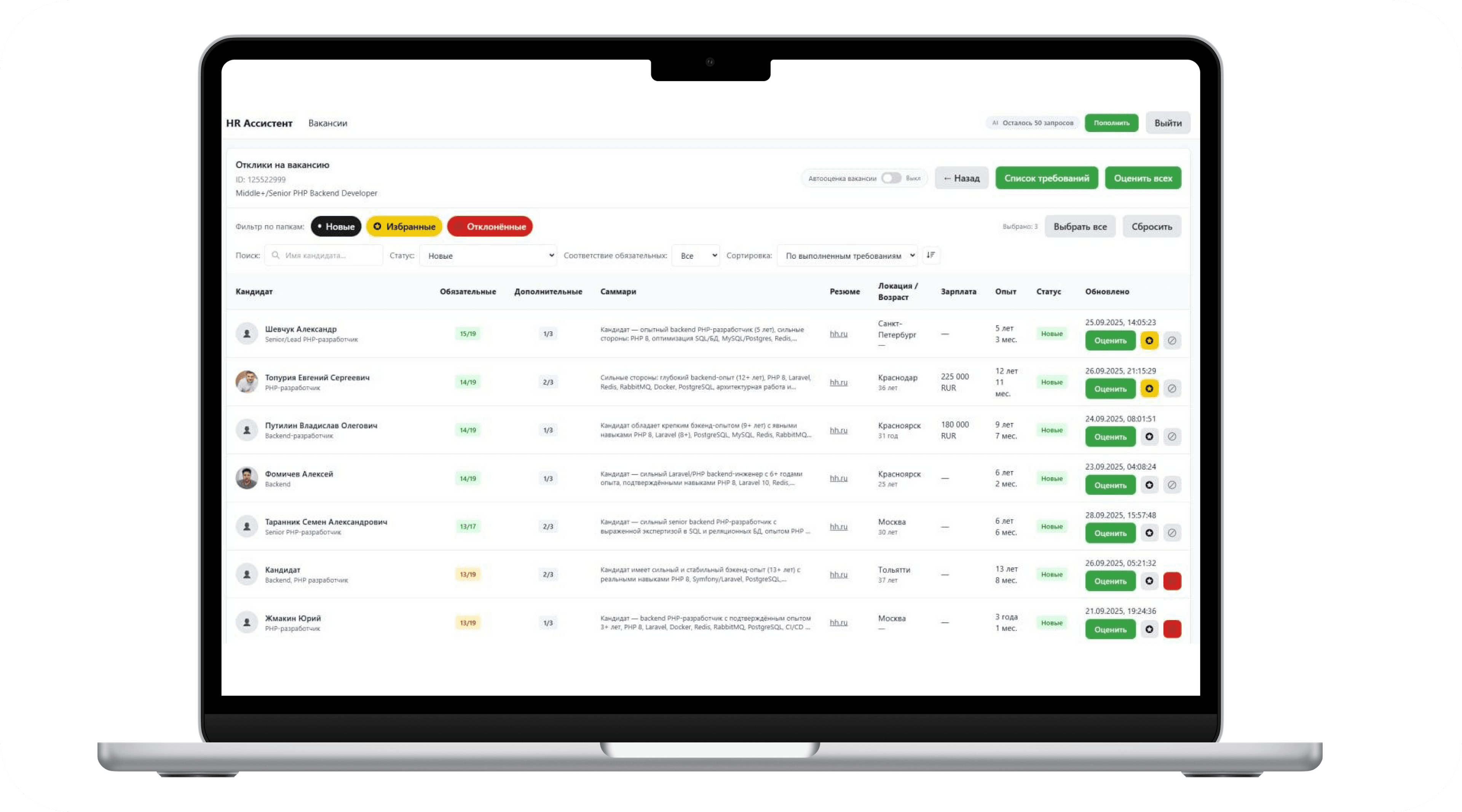
Мы реализовали сервис c умным ранжированием и прозрачной логикой оценки кандидатов. Рассмотрим интерфейс сервиса:
1. Страница откликов
Главный экран показывает все отклики по вакансии и сразу же выводит оценку соответствия требованиям. Кандидаты ранжируются по релевантности, можно добавить кандидатуру в избранное или отклонить.
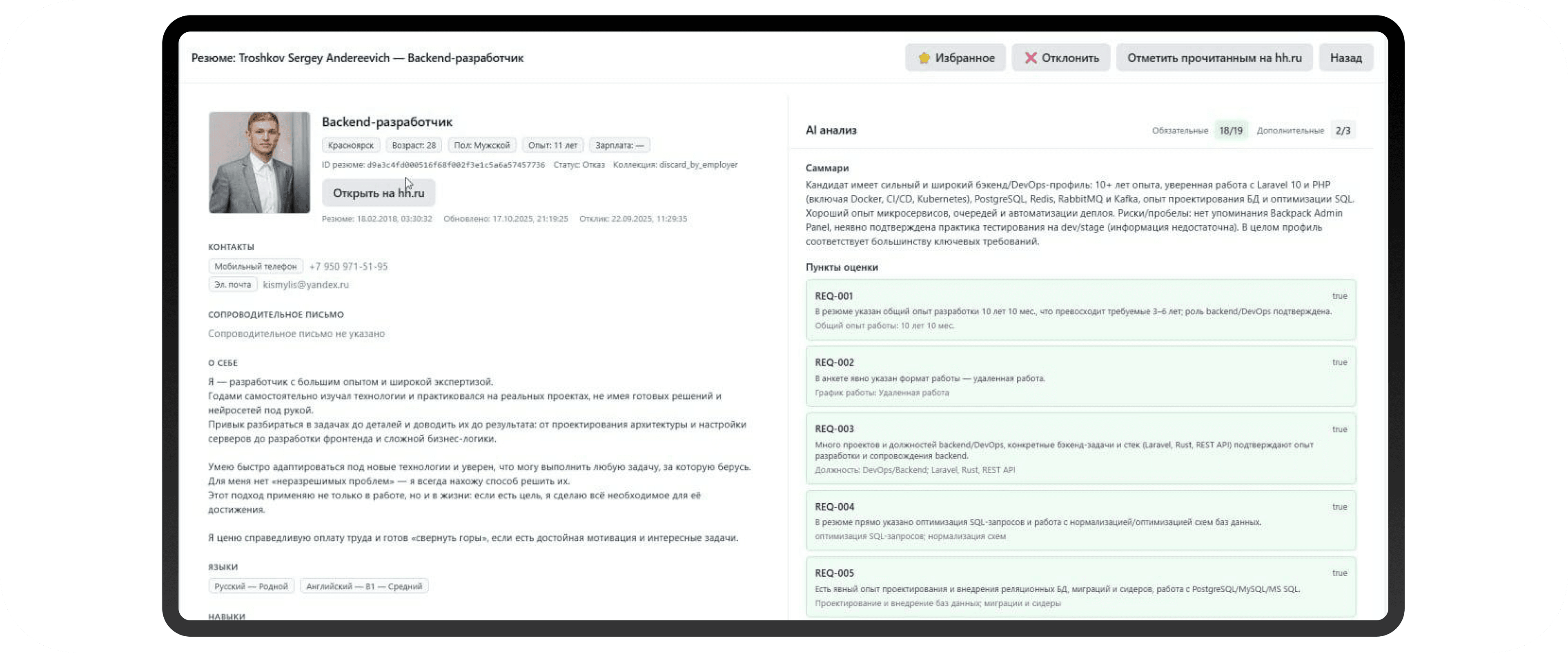
2. Страница кандидата
Для каждого кандидата формируется подробный профиль: слева — автоматически подтянутое резюме, справа — ИИ-анализ с краткой сводкой и оценкой навыков в разрезе требований вакансии.
3. Чек-лист требований
Из описания вакансии автоматически строится структурированный чек-лист, по которому удобно проверять кандидата. HR может выставить дополнительные фильтры и применить их — система сразу же проведет сортировку по новому критерию. Чек-лист переводит описание вакансии в понятную систему критериев, снижая субъективность оценки.
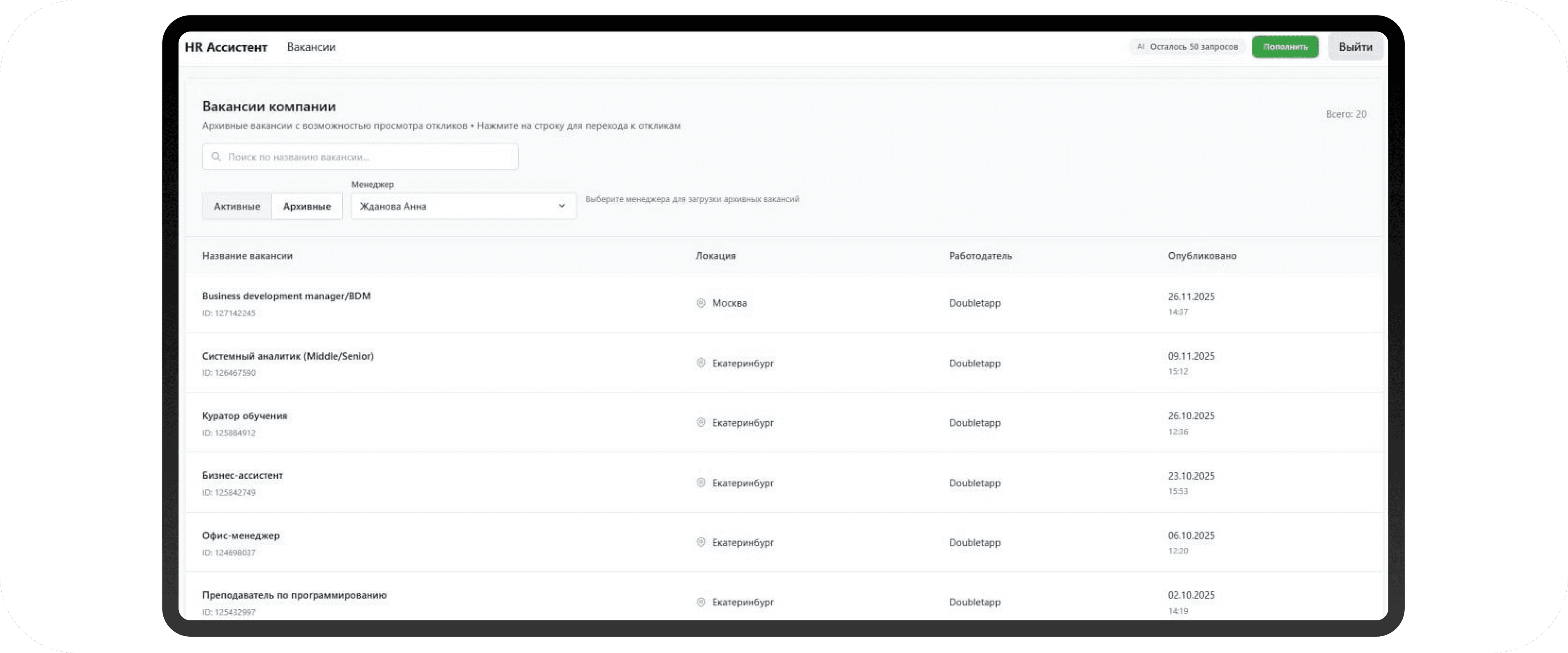
4. Вакансии компании
Все вакансии автоматически подгружаются из сервисов по поиску работы. Их удобно фильтровать по статусу (актуальные или архивные), ответственным менеджерам и дате публикации.
Так HR перестает разбираться вручную в потоке резюме, а работает с уже отсортированными и структурированными данными.
Результат
Результат
Результат
После внедрения сервиса:
- Эффективность HR-отдела выросла на 40% благодаря автоматизированной обработке большого потока резюме.
- Скорость проверки откликов увеличилась: система анализирует более 5000 кандидатских профилей и сразу показывает рейтинг по понятной шкале.
- Снизился риск ошибок — каждый кандидат оценивается по чётким параметрам, а чек-лист требований позволяет контролировать качество отбора и редактировать критерии при необходимости.
- Процесс найма стал прозрачным и управляемым: для каждого кандидата формируется отчёт с выделением подходящих и неподходящих навыков относительно вакансии.
Автоматизация обработки откликов позволила HR-отделу сосредоточиться на работе с релевантными кандидатами, сократить время первичного отбора и снизить количество ошибок за счёт единых критериев оценки. Итог — быстрее закрываются вакансии, команда тратит меньше ресурсов на рутину, а качество подбора растёт.