Проект
О проекте
О проекте
О проекте
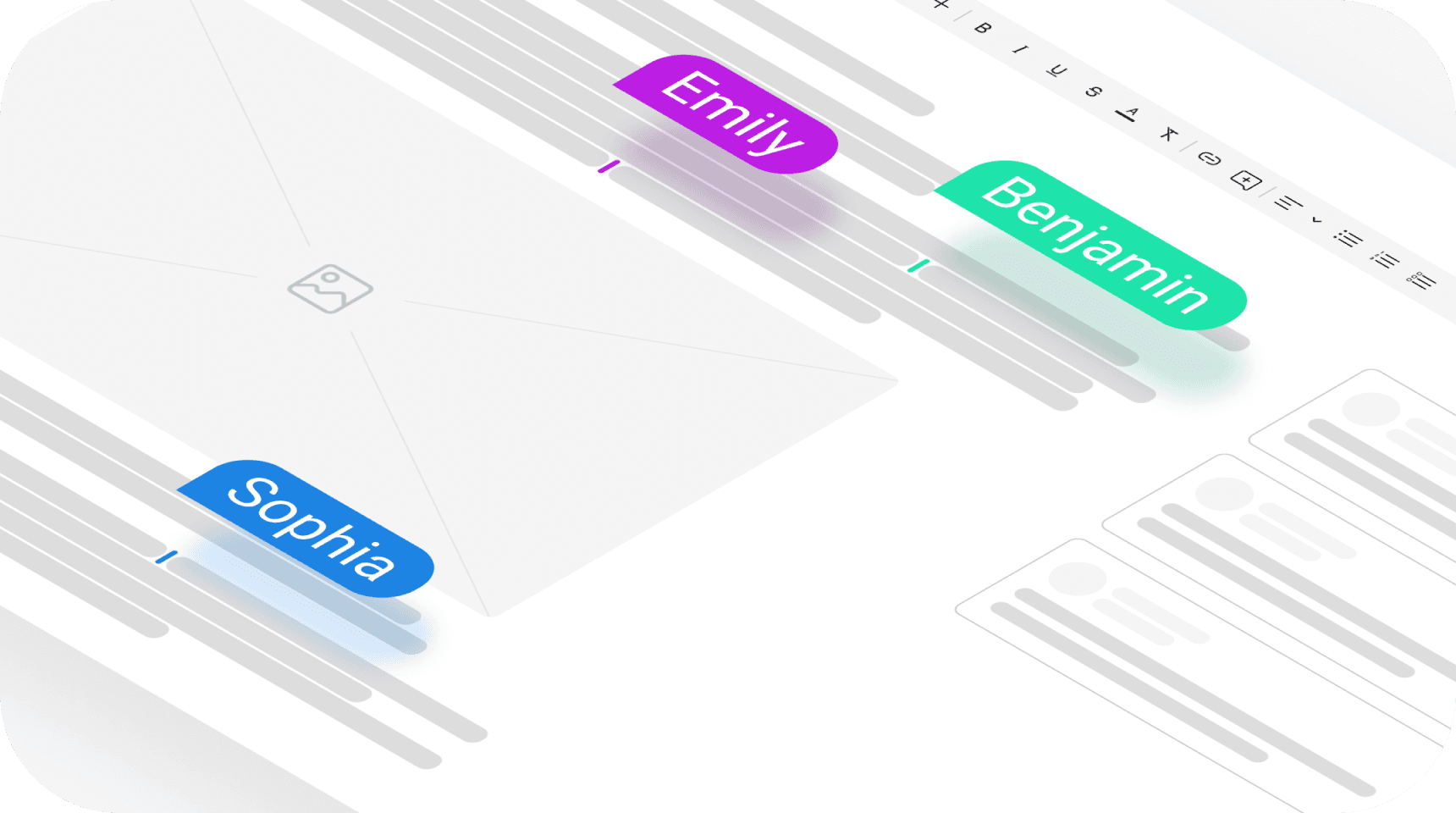
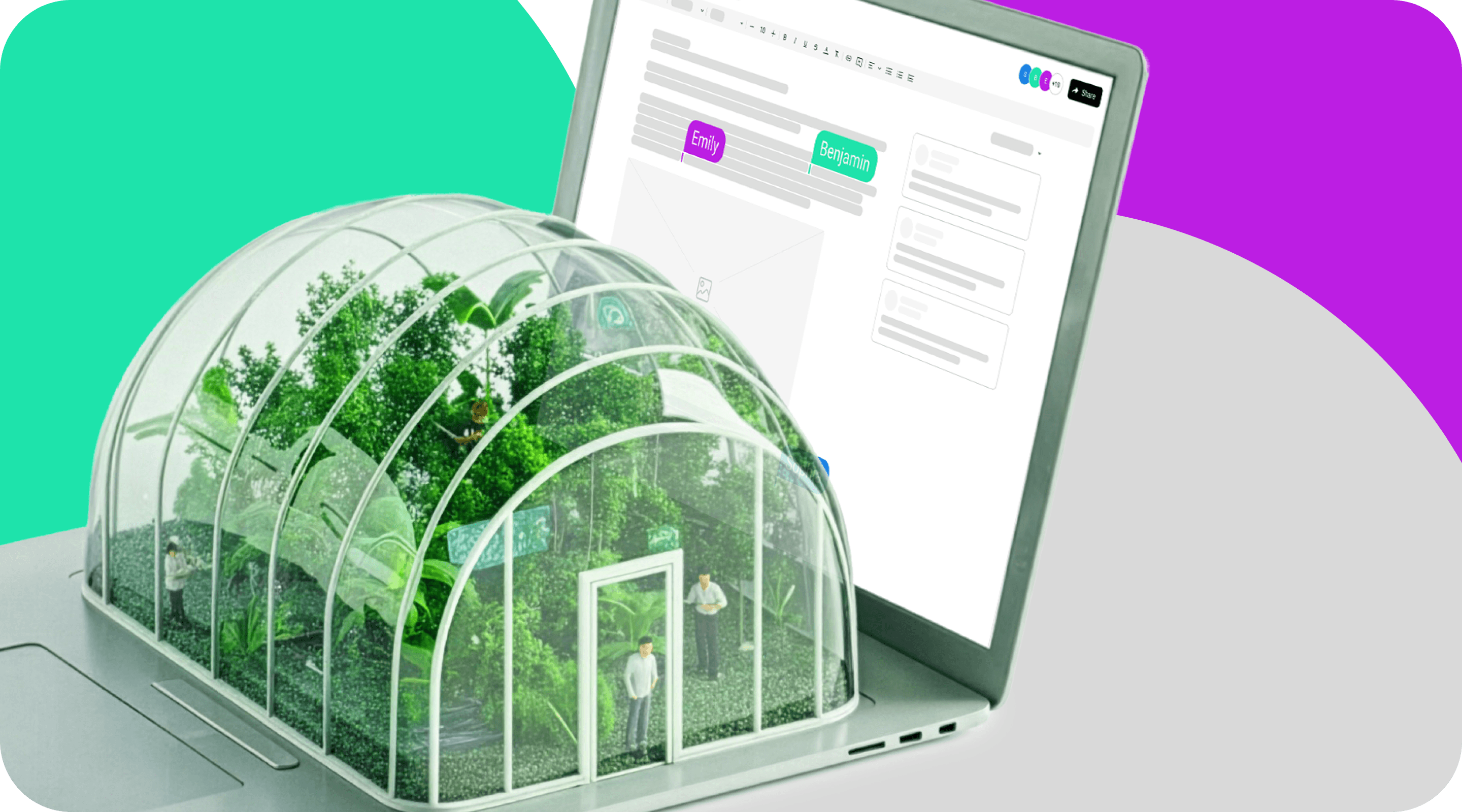
Крупнейшая в СНГ торговая B2C-площадка обратилась к Doubletapp с задачей создать защищённый, удобный и отказоустойчивый коллаборативный редактор для работы с внутренней документацией. На рынке не было бесплатных готовых решений, которые одновременно обеспечивали бы высокий уровень безопасности и комфортную совместную работу с текстами — большинство популярных сервисов хранили данные на зарубежных серверах, что создавало риски потери доступа и утечки информации.
ПРОБЛЕМА
ПРОБЛЕМА
ПРОБЛЕМА
- Документы хранились на компьютерах сотрудников в разных форматах, без единой системы и централизованного доступа.
- Невозможно было быстро найти нужный файл и понять, какая версия актуальна и согласована.
- Отсутствие прозрачности: кто и когда вносил изменения, кому и с каким уровнем доступа они доступны.
- Риски потери данных и нарушение корпоративных требований по безопасности из-за использования общедоступных инструментов.
Требования заказчика:
- Документы хранятся только на собственных серверах компании.
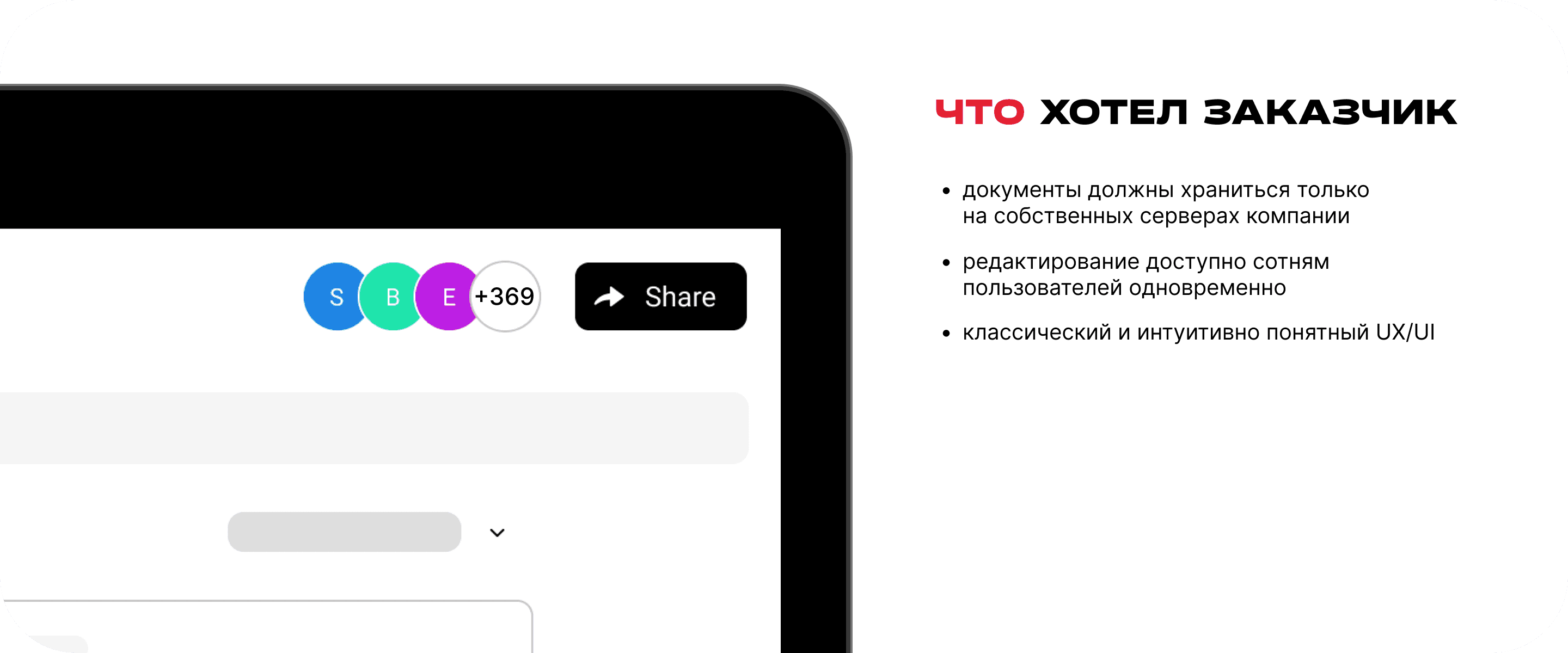
- Отказоустойчивость: редактирование доступно одновременно сотням сотрудников.
- Классический интуитивно понятный UX/UI, аналогичный общеизвестным редакторам (Word, Google Docs), чтобы не нужно было учиться работать с новым инструментом.
- Регулярные обновления функционала (раз в месяц).
РЕШЕНИЕ
РЕШЕНИЕ
РЕШЕНИЕ
Мы изучили популярные инструменты и вместе с заказчиком определили, каким должен быть функционал и интерфейс. Выбрали стабильное решение на базе PostgreSQL, чтобы обеспечить быструю и надёжную синхронизацию правок в реальном времени.
Работа шла поэтапно: сначала выпустили минимальную версию с основными функциями, затем начали наращивать инструментарий — комментарии, управление доступами, многостраничные документы и т.д. На последнем этапе навели красоту, доработали UX/UI, протестировали.
В итоге за 6 месяцев мы создали отказоустойчивый и удобный редактор, который ускорил работу с документами и обеспечил комфортную совместную работу без потерь данных. Решение прошло нагрузочные испытания, внедрено в корпоративном контуре и ежедневно используется всеми сотрудниками компании.
РЕЗУЛЬТАТ
РЕЗУЛЬТАТ
РЕЗУЛЬТАТ
За 6 месяцев команда Doubletapp с нуля реализовала масштабный проект, который кардинально изменил работу с документацией внутри компании.
- Все документы централизованно хранятся в едином защищённом пространстве на внутренних серверах — гарантируется безопасность и соответствие корпоративным политикам.
- Сотрудники работают в едином рабочем пространстве, видят и отслеживают последнюю версию документа.
- Удобный интерфейс и поддержка одновременного редактирования обеспечивают прозрачность и ускоряют совместную работу.
- Автоматическая история изменений и контроль доступа исключают путаницу и риск потери данных.
- При сбоях сети редактор сохраняет изменения локально и обновляет их автоматически после восстановления соединения.
- Доступен весь привычный функционал: комментарии, управление структурой и правами доступа и т.д. Не нужно разбираться, где какие инструменты, можно сразу работать.
- Доказанная отказоустойчивость и производительность: мы провели тестирование с участием 500 наблюдателей и 20 редакторов одновременно, редактор работал стабильно.
В результате заказчик получил полностью разработанное под его запросы решение, которое обеспечило стабильность и безопасность документооборота компании.
Сейчас, когда многие компании теряют доступ к привычным иностранным сервисам или отказываются от них из соображений безопасности, созданный Doubletapp редактор демонстрирует реальную альтернативу привычным решениям. Команда готова адаптировать решение под любого заказчика — с набором классических или кастомных инструментов, полностью интегрированных в инфраструктуру клиента.
Наша суперкоманда
 ИльяDesign
 ЕкатеринаBackend
 ГригорийFrontend
 МарияQA
РЕАЛИЗАЦИЯ
РЕАЛИЗАЦИЯ
РЕАЛИЗАЦИЯ
Выбор референсов и стратегия
Команда Doubletapp начала с анализа популярных инструментов — Google Docs, Notion, Obsidian, Quip, Evernote — и совместно с заказчиком сформировала список референсов и архитектурных требований. Главный акцент сделали на UX/UI и удобстве взаимодействия:
- UX: лёгкое начало работы, быстрое освоение функций, отсутствие раздражающих мелочей;
- UI: современный интуитивный интерфейс, который помогает сосредоточиться на тексте.
Архитектурные решения
На архитектурной встрече с клиентом команда согласовала стек технологий и инфраструктурные решения. Чтобы упростить архитектуру, вместо связки PostgreSQL и MongoDB было решено использовать две базы PostgreSQL. Такое решение обеспечило стабильную синхронизацию изменений между пользователями и надёжное хранение данных.
Система обрабатывает действия нескольких участников в реальном времени: все правки синхронизируются мгновенно, а при потере соединения сохраняются локально и загружаются при восстановлении сети.
Обеспечение устойчивости к нагрузкам
Редактор прошёл нагрузочное тестирование: с одним документом одновременно работали 20 редакторов и более 500 наблюдателей. Тестирование подтвердило стабильность системы.
Этапы разработки:
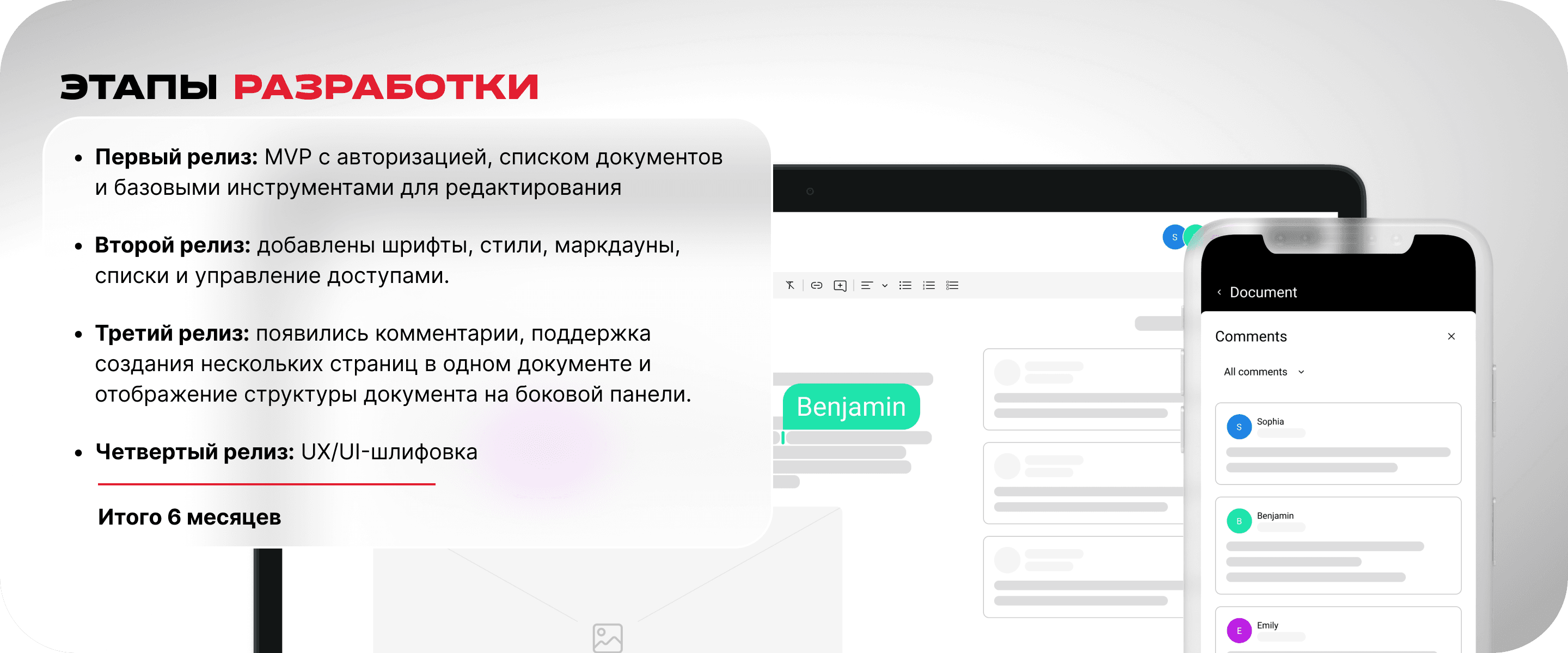
- Через два месяца заказчик получил MVP с авторизацией, списком документов и базовыми инструментами редактирования.
- Во втором релизе добавлены шрифты, стили, маркдауны, списки и управление доступами.
- В третьей итерации появились комментарии, поддержка нескольких страниц и структура документа на боковой панели.
- В четвёртой итерации команда сосредоточилась на UX/UI-шлифовке: интерфейс стал минималистичным, чтобы ничего не отвлекало от контента, работа в редакторе выполнялась комфортно и быстро.